Plastic pollution is one of the greatest threats facing our oceans. Up to 12 million tonnes of plastic is entering the oceans every year. This is affecting sea life – one in 3 turtles and 90% of seabirds are now estimated to have ingested plastic. Plastic is even ending up in the seafood on our plates.
Coca-Cola produces an estimated 100 billion throwaway plastic bottles every year – and billions of these will end up on beaches, in landfill and in the sea.
Greenpeace have called upon the soft drinks giant to reduce their plastic footprint and stop Coca-Cola bottles choking our oceans.
As the world’s largest soft drinks company, Coca-Cola has a special responsibility for the plastic that is wrecking our oceans. Here’s why we’re at Coke HQ today:
1. Coca-Cola has a huge plastic footprint (but it wants to keep it secret)
Coke produces over 100 billion throwaway plastic bottles every year, according to Greenpeace analysis – That’s a shocking 3,400 throwaway plastic bottles every second.
Organisations are having to rely on their own calculations from the limited information Coke makes available, because the company was the only one of the top 6 soft drinks brands that refused to own up to how much plastic it is selling every year.
But Coca Cola can’t hide the fact that billions of its plastic bottles are failing to be recovered every year and end up in the environment: on beaches, in landfill and in the oceans.
2. Throwaway culture
Single-use plastic bottles make up nearly 60% of all the drinks packaging Coke sells around the world. Given that Coke sell 1.9 billion drinks servings every single day – that’s a lot of plastic!
And these throwaway bottles are on the rise. Single-use plastic bottles make up 12% more of Coca-Cola’s packaging than they did a decade ago, while the proportion of refillable containers has dropped from just under a third to just a quarter. With our oceans choking on plastic pollution, Coke’s backtracking is unacceptable.
3. Recycling fail
Coca-Cola tells its customers it’s their responsibility to recycle, but the soft drinks giant got less than halfway towards its 2015 target to get a mere quarter 25% of plastic bottles from “recycled or renewable sources”.
In fact, Coca-Cola currently uses a miserable 7% recycled content on average across its global plastic bottle sales.
After missing its 2015 target, Coke now has no further global targets to use more recycled content across its plastic bottles.
Not that it’s got any better at meeting the environmental targets it does have – Coca-Cola is actually getting further away from its own 2020 goal to recover and recycle 75% of its drinks containers, with numbers of containers recovered and recycled dropping ever since the company set the goal in 2013.
4. Lobbying and greenwash
Coca-Cola claims to care about the environment, and spends huge sums sponsoring beach cleans and anti-litter campaigns. These schemes keep the focus firmly on Coke’s customers – distracting from the company’s lacklustre efforts to reduce its own plastic footprint.
Behind these donations, the soft drinks giant has actually been lobbying hard against policy measures that can boost reuse and recycling. Coke’s strong circular economy legislation in the EU and has a history of opposing deposit return schemes across Australia, North America and Europe.
5. Coca-Cola can act to end ocean plastics
Coca-Cola knows it can’t ignore its plastic problem forever. Greenpeace's action and new report makes that ever clearer.
With billion dollar profits and global reach, Coke has the means and the influence to make a big contribution to ending the flow of plastic into the ocean.
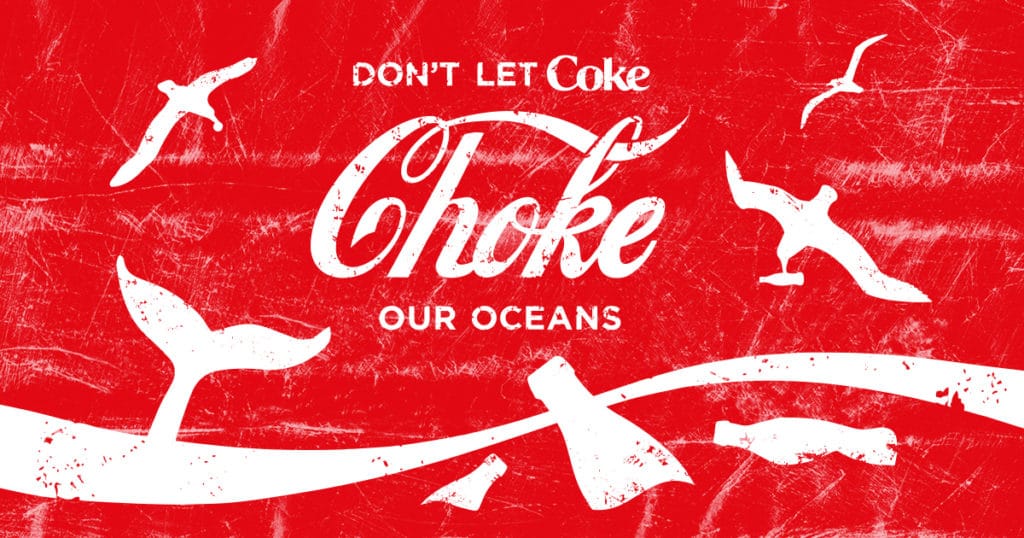 |
Greenpeace installed this piece of art work outside Coke's HQ to hold the soft drink giants accountable for their actions and to show them they hold a special responsibility in the sustainability and protection of our planet and oceans. |
Comments
Post a Comment